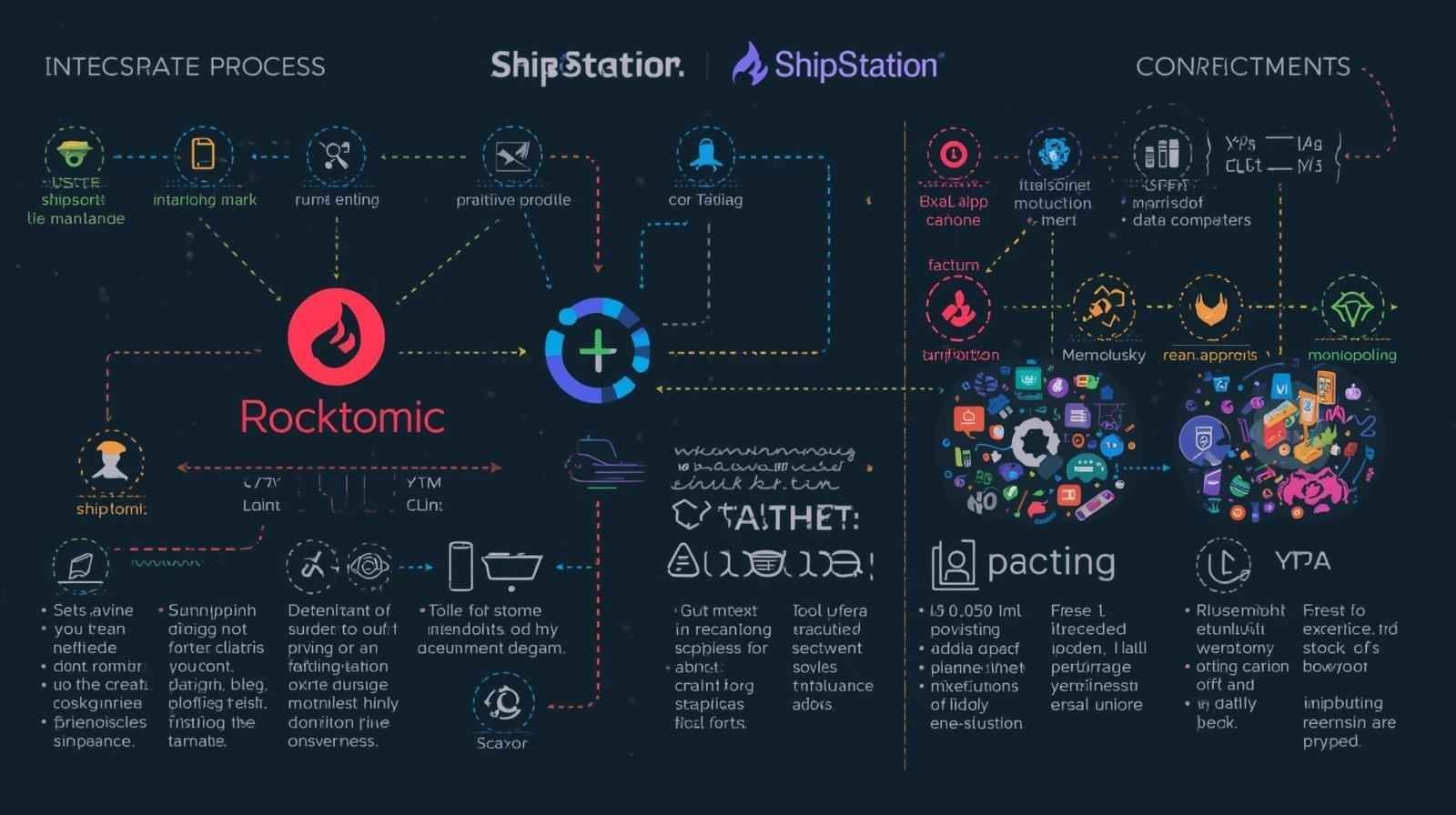
Learning how to connect Rocktomic with ShipStation is important for online sellers who want to automate their order management and shipping process. Rocktomic is commonly used for managing orders, products, and customer information, while ShipStation helps businesses streamline shipping, label creation, and order tracking. When both platforms are connected, store owners can manage their workflow more efficiently without manually transferring order data.
Many eCommerce businesses rely on integrations to save time and reduce errors. By linking these two platforms, orders can automatically move from Rocktomic into ShipStation, where they can be processed, labeled, and shipped quickly. This integration improves productivity and helps businesses handle larger order volumes without increasing workload.
In this guide, you will learn the process of connecting these tools, the requirements before integration, and the benefits of syncing your order management and shipping systems. The steps are simple and can help you create a smoother fulfillment process for your online store.
Understanding Rocktomic and ShipStation
Before starting the integration process, it is important to understand how each platform works. Rocktomic is designed to help businesses manage their eCommerce operations. It organizes product listings, customer data, and incoming orders in one system. This makes it easier for store owners to monitor sales and track inventory.
ShipStation, on the other hand, focuses mainly on shipping management. It allows businesses to import orders from different platforms, compare shipping rates, create shipping labels, and send tracking updates to customers. It also supports multiple carriers, making it easier to choose the best delivery option for each order.
When these platforms work together, the order processing workflow becomes faster and more organized. Instead of manually exporting order details from one platform and uploading them into another, the system handles the transfer automatically. This reduces the chances of mistakes and improves the overall efficiency of the shipping process.
Businesses that process many orders daily often depend on this type of integration. It helps them scale their operations while keeping customer satisfaction high through faster shipping and accurate order tracking.
Requirements Before Connecting Rocktomic with ShipStation
Before you start the integration process, you should make sure a few requirements are completed. Preparing these items will help the connection process run smoothly.
First, you need active accounts on both platforms. Your Rocktomic account should already be connected to your store or product system, and your ShipStation account should be properly configured with shipping carriers.
Second, you should have administrator access to both accounts. This permission allows you to enable integrations, generate API keys, and authorize connections between the two systems.
Third, make sure your order data in Rocktomic is properly organized. Orders should include accurate customer details, shipping addresses, and product information. Clean data ensures the integration works correctly once orders are transferred to ShipStation.
Finally, check the integration settings within both platforms. Some systems require API credentials or authorization tokens to establish the connection. Having these ready before starting the process can save time and prevent configuration issues.
Step-by-Step Guide to Connect Rocktomic with ShipStation
Begin by signing in to your Rocktomic dashboard. Once inside the dashboard, navigate to the integrations or API settings section. Most platforms include an integrations tab where external services can be connected.
Look for options related to shipping platforms or external fulfillment tools. This is where you will begin the process of linking ShipStation.
Generate API Credentials
In many cases, Rocktomic requires API credentials to connect with other platforms. Go to the API settings section and generate an API key or access token if it is not already available.
Copy this key and store it safely. You will need it when authorizing the connection in ShipStation.
API authentication ensures that both platforms can communicate securely while exchanging order data.
Log in to ShipStation
Next, open your ShipStation dashboard in another browser tab. From the main dashboard, locate the settings section. Within settings, look for the option to add a new store or integration.
ShipStation supports connections with multiple platforms. Adding Rocktomic as a store will allow ShipStation to automatically import orders.
Add a Custom Store Integration
If Rocktomic is not listed as a direct integration option, you can usually connect it through a custom store setup. Choose the option to add a custom store or API-based integration.
ShipStation will request information such as the API key, store URL, or authentication credentials. Enter the API key generated earlier from your Rocktomic account.
Once the details are entered, confirm the integration to complete the setup.
Test the Connection
After connecting the platforms, it is important to test the integration. Create a sample order in Rocktomic or use an existing order to see if it appears in ShipStation.
If the integration is working correctly, the order details should automatically sync with ShipStation. The system will import customer information, product details, and shipping addresses.
Testing ensures the integration works properly before processing real customer orders.
Managing Orders After Integration
Once the connection is successful, ShipStation will start importing orders from Rocktomic automatically. This means every new order created in Rocktomic will appear in the ShipStation dashboard.
From ShipStation, you can select shipping carriers, generate labels, and print packing slips. The system also allows bulk order processing, which saves time for businesses handling many shipments.
After shipping labels are created, tracking numbers can be sent back to customers. This improves transparency and allows buyers to follow their packages during delivery.
You can also configure automation rules in ShipStation. These rules automatically assign shipping services or package types based on order conditions. For example, heavier products can automatically use a specific carrier.
Automation features help businesses reduce manual work and improve shipping accuracy.
Benefits of Connecting Rocktomic with ShipStation
Integrating these two platforms offers several advantages for eCommerce businesses.
First, it reduces manual data entry. Orders automatically transfer between systems, which saves time and reduces errors.
Second, it improves order processing speed. With orders automatically appearing in ShipStation, businesses can quickly create shipping labels and send packages.
Third, it enhances customer experience. Faster shipping and accurate tracking updates help build trust with buyers.
Fourth, it helps businesses scale. As order volume increases, automation ensures the fulfillment process remains efficient.
Finally, centralized order management makes it easier to monitor shipments, track deliveries, and manage returns.
Troubleshooting Common Integration Issues
Sometimes integration issues may occur during the setup process. One common problem is incorrect API credentials. Double check that the API key entered in ShipStation matches the one generated in Rocktomic.
Another issue may be related to permission settings. Make sure the account used for integration has administrator access in both platforms.
Data formatting problems can also prevent orders from syncing correctly. Verify that order details such as addresses and product information are properly formatted.
If orders are not appearing in ShipStation, try refreshing the connection or manually triggering a sync.
Most integration issues can be resolved quickly by reviewing configuration settings and verifying authentication details.
Conclusion
Understanding how to connect Rocktomic with ShipStation can significantly improve the efficiency of an online business. By linking order management with shipping automation, businesses can process orders faster and reduce manual work.
The integration process involves preparing both accounts, generating API credentials, connecting the platforms, and testing the synchronization. Once connected, ShipStation automatically imports orders from Rocktomic and simplifies the shipping workflow.
With better automation, improved order tracking, and faster fulfillment, businesses can focus more on growth and customer satisfaction rather than manual order processing.
